

We recently administered a DOT drug test on a CDL Truck Driver. The lab reported the specimen positive for Cocaine. As is required by regulation, during the interview with the employee, Dr. Doncer, our MRO, explained the challenge process to the donor.
 We do a lot of testing for the legal world; most are for custody battles. Many Judges and Lawyers trust First Choice to provide accurate results in a timely manner. Many of them have used us for years and regularly we share our knowledge and sometimes even our testimony in their court rooms.
 We had a donor give us a urine specimen that was temperature out of range. We get these a lot – I guess unseasoned cheaters don’t realize that temperature is one of the many ways collectors determine if a specimen is legitimate. This was not a DOT test, so we explained we could not accept the sample, gave her some water, and asked her to wait in the waiting room and let us know when she’s ready to try again.
In the waiting room, she began to complain that her chest was hurting. She began gagging and spitting up water. We immediately offered to call an ambulance, but she refused. She said she had gallbladder and pancreas issues causing her to vomit and her chest pains.
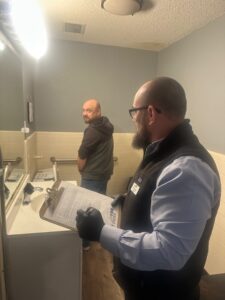 We had a customer request that we “monitor” a drug test for one of their employees. A monitored collection is different than a directly observed collection.
Monitored simply means the door remains open and the donor turns his back to the collector. Directly observed is defined as the collector must directly observe the urine leaving the donors body, directly observed collections are quite invasive.